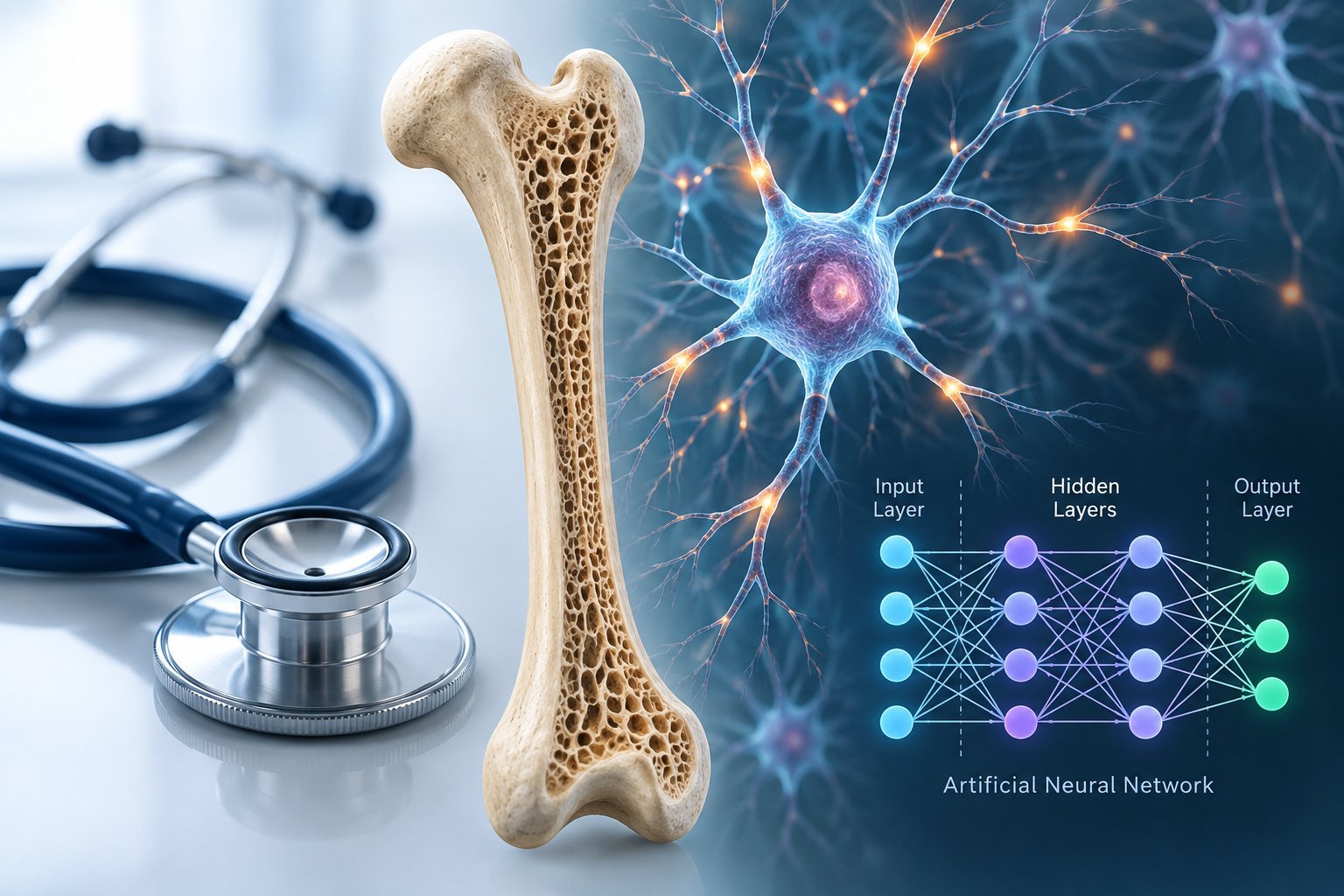
From Clinical Intelligence to Artificial Intelligence
For billions of years, intelligence has been a defining characteristic of living systems—from humans and animals to the remarkable adaptive intelligence observed in plants. Today, we are witnessing a profound transition: for the first time, intelligence is being embedded in non-living systems and machines.
Artificial Intelligence (AI) is rapidly transforming healthcare, and there is growing enthusiasm to integrate AI into hospitals, clinical practice, diagnostics, administration, and patient care. Yet, despite this enthusiasm, a fundamental challenge remains: Where does a hospital actually begin?
Information about healthcare AI is abundant, but it is often fragmented across technologies, specialties, software platforms, and individual use cases. What is frequently missing is a clear, clinically intuitive framework that demonstrates how AI can be implemented across the actual patient journey.
A clinical encounter begins with the interaction between a doctor and a patient. During this interaction, the clinician continuously gathers information through multiple senses.
The doctor sees—the patient's facial expression, swelling, redness, skin lesions, deformities, gait, and other visible clinical signs.
The doctor hears—the patient's voice, cough, breathing patterns, wheezing, hoarseness, and, when required, physiological sounds such as the heartbeat.
The doctor smells—recognising clinically relevant odours that may occasionally provide important diagnostic clues.
The doctor touches—assessing temperature, tenderness, texture, consistency, pulses, range of motion, deformity, and other physical findings through examination.
These observations are interpreted by the clinician and transformed into clinical information, measurements, and features that ultimately contribute to diagnosis, decision-making, and treatment.
For AI to participate meaningfully in healthcare, this same clinical information must be captured, digitised, structured, and converted into machine-readable data or features. The resulting data can then be analysed by AI systems to identify patterns, generate predictions, support clinical decisions, automate processes, and improve patient outcomes.
Understanding the AI Journey in a Hospital
This platform is designed to make that journey understandable and actionable.
Rather than approaching AI as a collection of disconnected technologies, we follow the actual clinical workflow—from the patient's first interaction with the healthcare system to examination, investigation, diagnosis, treatment, documentation, and follow-up.
Step by step, we identify:
- What information is generated at each stage
- How that information can be captured as data
- How clinical observations can be converted into machine-readable features
- Which AI technologies can be applied
- Where AI can augment, automate, or support clinical workflows
- How these components can be integrated into the hospital's existing ecosystem
The objective is not simply to explain what AI can do, but to demonstrate where AI fits, what data it requires, how it flows through the system, and how a hospital can implement it in practice.
This site provides a step-by-step roadmap for implementing AI in hospitals —following the same flow through which doctors and patients experience healthcare in the real world.
Dr. Rakesh Kumar · Associate Professor of Orthopaedics, IGIMS Patna · View my academic profile, publications and courses →