Where this fits
This is what the earlier modules are building toward. Registration and the vitals kiosk capture demographics and vitals. The clinical examination templates capture system-wise findings. Blood, urine, stool, and sputum investigations and imaging add the rest. Once a patient's record has all of that, structured the same way every time, a model has enough to work with.
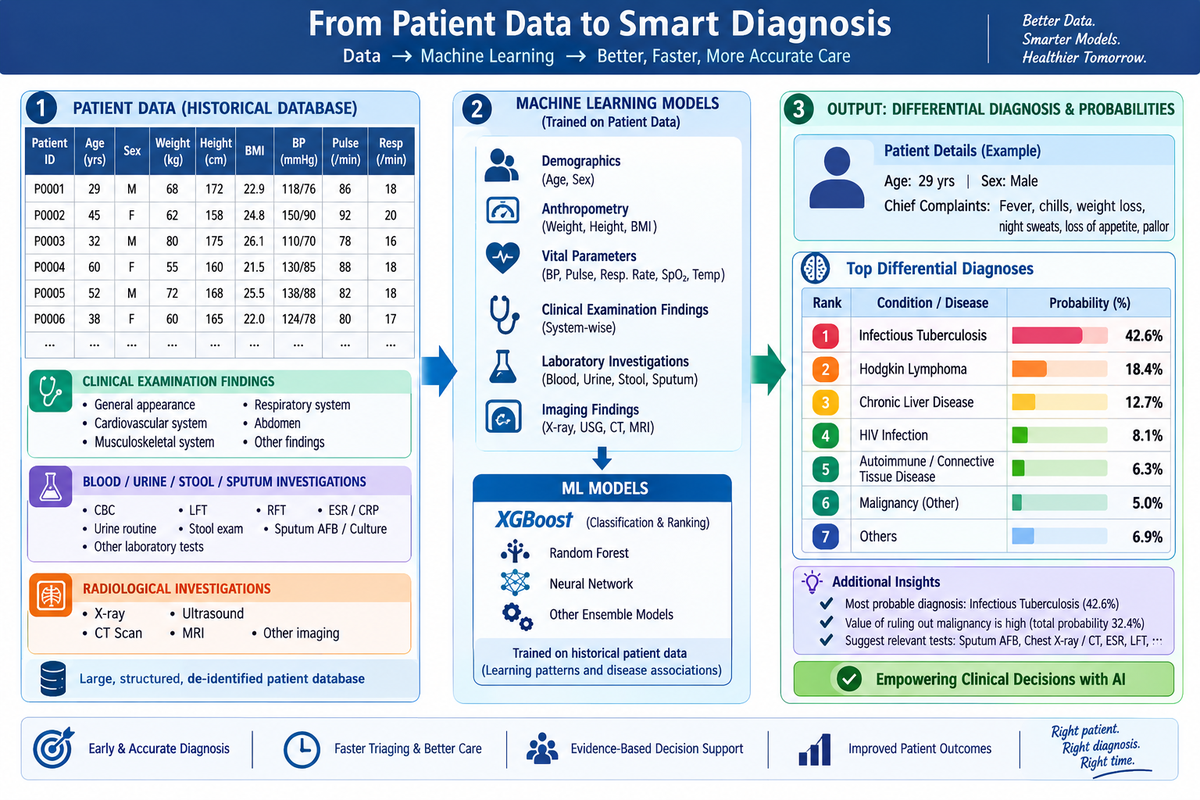
What the model would output
Not a single diagnosis, but a ranked differential — several possible conditions, each with a probability, in the order the data makes them likely. Alongside the ranking, the kind of insight a junior doctor would want spelled out: which diagnosis is most probable, which serious conditions are worth actively ruling out even at a lower probability, and which further tests would sharpen the picture.
The doctor is still the final authority
This is the point that matters most about this module. After every earlier step — registration, vitals, examination, investigations — the model's output is a probability-ranked suggestion, not a verdict. The treating doctor reviews it against everything a model can't see or weigh the way a clinician does, and either accepts, modifies, or refutes it. The final diagnosis in the patient's record is always the doctor's, made with the model's ranking as one input among others — never the model's output written in unchanged.